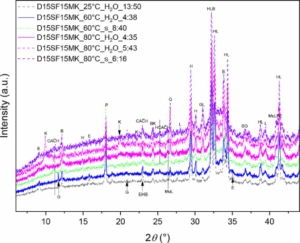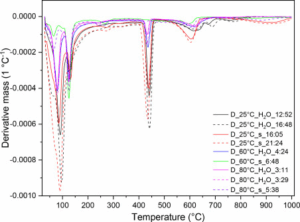







Study of carbonation and combined chemical corrosion of cement composites affected by geothermal water
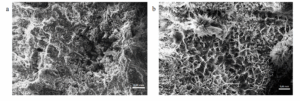 In applications exposing cementitious materials to elevated carbon dioxide (CO2) concentrations, such as oil and gas wells operations, it is required to design carbonation-resistant cements. Carbonation, or carbonic corrosion, proceeds simultaneously with the hydration reactions of clinker phases and, in blended cements, pozzolanic and/or latent hydraulic reactions. The progress of carbonation depends on material composition, water-to-binder ratio, CO2 concentration, temperature, etc. Depending on the degree of carbonation, the process may refine the pore structure and improve the mechanical strength of the material or, conversely, lead to microstructural degradation and increased permeability. A comprehensive understanding of these processes under specific conditions is essential for the design of materials suitable for CO2 sequestration. Research objectives • Study of the degradation reactions from early stages of cement binder hydration. • Evaluation of carbonic corrosion in cement composites in dependence on composition. • Analysis of temperature, pressure, and geothermal water composition effects on the carbonic corrosion across different cement composite compositions. • Evaluation of carbonic corrosion´s impact on pore structure and mechanical properties development at various hydration stages.